
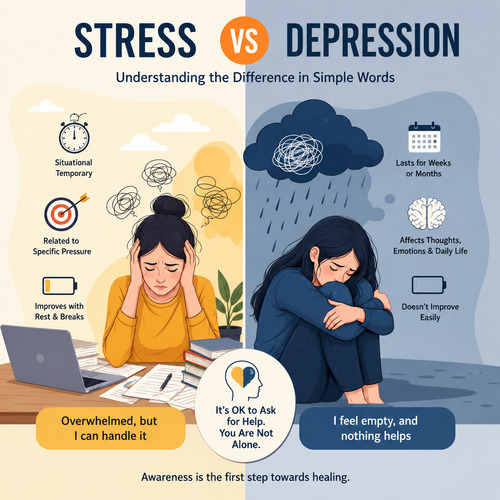
In today’s fast-moving lifestyle, emotional pressure has become very common. Many people feel mentally exhausted because of work stress, relationship issues, financial pressure, family responsibilities, or personal struggles. During difficult times, people often use the words “stress” and “depression” interchangeably. However, stress and depression are not the same thing.
Understanding the difference between stress and depression is important because both conditions affect mental health differently. While stress is usually temporary and connected to external situations, depression is a deeper mental health condition that can impact emotions, thinking patterns, energy levels, relationships, and daily life.
At The Psych Clinic, Sector 62, Gurgaon, many individuals seek guidance because they are unsure whether they are experiencing normal stress or signs of depression. This blog explains both conditions in simple and easy-to-understand language so people can better recognize emotional health concerns and seek support at the right time.
What Is Stress?
Stress is the body’s natural response to pressure, challenges, or demanding situations. It can happen when a person feels overwhelmed physically, mentally, or emotionally.
Stress is not always negative. In some situations, a small amount of stress can help people stay alert, focused, and motivated. For example, students may feel stressed before submissions, or employees may feel pressure before important deadlines.
However, when stress becomes constant and difficult to manage, it can start affecting both mental and physical health.
Common Causes of Stress
- Work pressure and deadlines
- Financial problems
- Relationship conflicts
- Family responsibilities
- Academic pressure
- Health concerns
- Major life changes
- Lack of sleep
Common Symptoms of Stress
- Constant worrying
- Overthinking
- Irritability or anger
- Difficulty concentrating
- Headaches or body pain
- Sleep problems
- Fast heartbeat
- Low energy
- Feeling mentally exhausted
Stress symptoms are usually connected to a specific situation and often improve once the situation becomes manageable.
What Is Depression?
Depression is a mental disorder that affects how a person thinks, feels, and behaves. It is much more serious than temporary sadness or emotional stress.
A person with depression may feel emotionally empty, hopeless, disconnected, or unmotivated for weeks or even months. Depression can reduce interest in daily activities and make simple tasks look difficult.
Unlike stress, depression may continue even when there is no clear reason behind the emotional pain.
Common Symptoms of Depression
- Persistent sadness
- Feeling hopeless or worthless
- Loss of interest in activities once enjoyable
- Lack of motivation
- Low energy and fatigue
- Changes in sleep patterns
- Changes in appetite
- Difficulty focusing
- Social withdrawal or isolation
Depression can affect personal relationships, career performance, confidence, and overall quality of life. In severe cases, it may also lead to thoughts of self-harm or suicide, which should never be ignored.
The Main Difference Between Stress and Depression
Although stress and depression may share some symptoms, they are different in many ways.
Stress Is Usually Temporary
Stress is generally linked to external situations such as work pressure, exams, financial issues, or personal responsibilities. Once the situation improves, stress levels often reduce as well.
Even during stressful periods, many people can still enjoy hobbies, social activities, or positive moments in life.
Depression Lasts Longer
Depression affects emotional health more deeply and impacts all spheres of life. A person with depression loses interest in activities they once enjoyed and struggle to feel happiness even when life situations improve.
Depression often affects motivation, emotional balance, and self-esteem in a more serious way than stress.
Can Long-Term Stress Lead to Depression?
Yes, long-term unmanaged stress can increase the risk of depression.
When the mind and body remain under constant pressure for a long time, emotional exhaustion can develop. A person may slowly begin to feel helpless, emotionally drained, and mentally disconnected.
Situations that may increase this risk include:
- Continuous workplace pressure
- Toxic relationships
- Emotional trauma
- Financial struggles
- Lack of emotional support
- Chronic health problems
- Poor sleep and unhealthy lifestyle habits
This is why it is important to manage stress early before it begins affecting emotional well-being more seriously.
Healthy Ways to Manage Stress
Managing stress in healthy ways can improve emotional balance and reduce mental exhaustion.
- Maintain a healthy sleep routine
- Exercise regularly
- Practice meditation or deep breathing
- Reduce excessive screen time
- Take regular breaks from work
- Talk openly with supportive people
- Follow a balanced daily routine
- Spend time doing enjoyable activities
Simple lifestyle improvements can make a significant difference in reducing stress levels and improving emotional well-being.
When Should You Seek Professional Help?
Many people ignore emotional struggles and assume they will disappear on their own. However, professional support becomes important when symptoms continue for a long time or begin affecting daily life.
You should consider seeking help if:
- Stress or sadness lasting several weeks
- Constant emotional exhaustion
- Disturbed sleep or appetite
- Inability to enjoy activities previously pleasurable
- Constant negative thoughts
- Persistent dysfunction at work or studies
- Hopelessness or emotional disconnection
- Poor Social relationships
Seeking support early can help prevent these symptoms from becoming more severe.
How Therapy Can Help
Therapy provides a safe and supportive environment where people can openly discuss their emotions, thoughts, and challenges without judgment.
Mental health professionals can help individuals:
- Understand the root cause of emotional struggles
- Develop healthy coping strategies
- Manage anxiety and negative thinking
- Improve emotional resilience
- Build confidence and self-awareness
- Improve communication and relationships
Professional guidance can help individuals feel emotionally stronger and more balanced over time.
Final Thoughts
Stress and depression may appear similar, but they are very different experiences. Stress is usually temporary and connected to external pressure, while depression is a deeper mental health condition that affects emotions, motivation, and overall quality of life.
Understanding the signs of both conditions is important for maintaining mental well-being. Emotional struggles should not be ignored, especially when they begin affecting daily life, relationships, or overall happiness.
Mental health deserves the same care and attention as physical health. Early awareness, healthy coping habits, emotional support, and professional guidance can make a significant difference in leading a healthier and more balanced life.